2,282 words, 12-minute read.
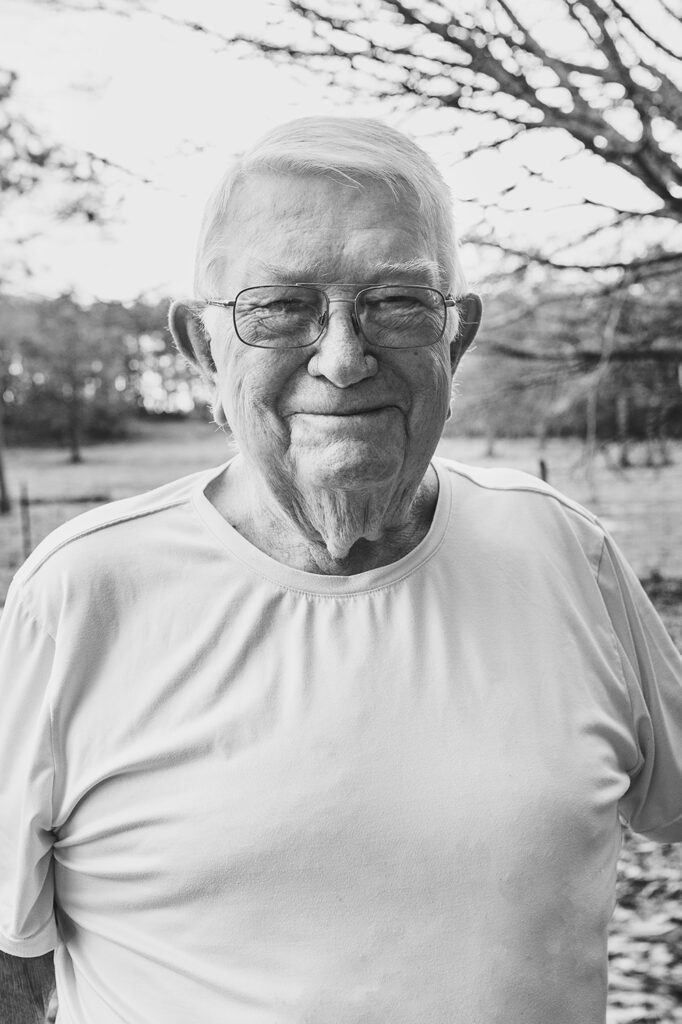
This installment is part of our People of Turner County series featuring Lowell “Bo” Joyner, whose stories and memories offer a firsthand glimpse into Turner County’s past. Due to the length and richness of his interview, the TCP has decided to share it in multiple parts.
This interview has been lightly edited for clarity while still preserving, as closely as possible, the original words and voice of Bo Joyner.
Interviewed March 6, 2026, in Sycamore, GA.
Turner County Project (TCP): Can you explain that [tobacco harvesting] to me? I never had anyone explain tobacco to me. How did that work in terms of taking the tobacco to the barn, hanging it, explain the whole thing to me?
Bo Joyner (B): Younger guys – 18 to 30 – would go to the field, and they would crop it by hand. Walk along, bend over, and crop the leaves off, starting at the bottom. So many every week, usually. As the leaves would turn a little yellow, they would go through and crop it and put it under their arm. They would walk between the rows of tobacco. Now they got to get rid of this tobacco under their arms, so they had a sled, it was just a frame that would fit between the rows. It was 6-7 feet long. It stood about 40 inches. It was a frame, and it had old croaker sacks that made the inside wall so that it wouldn’t be so heavy for the mule to pull, and it wouldn’t bruise the tobacco.
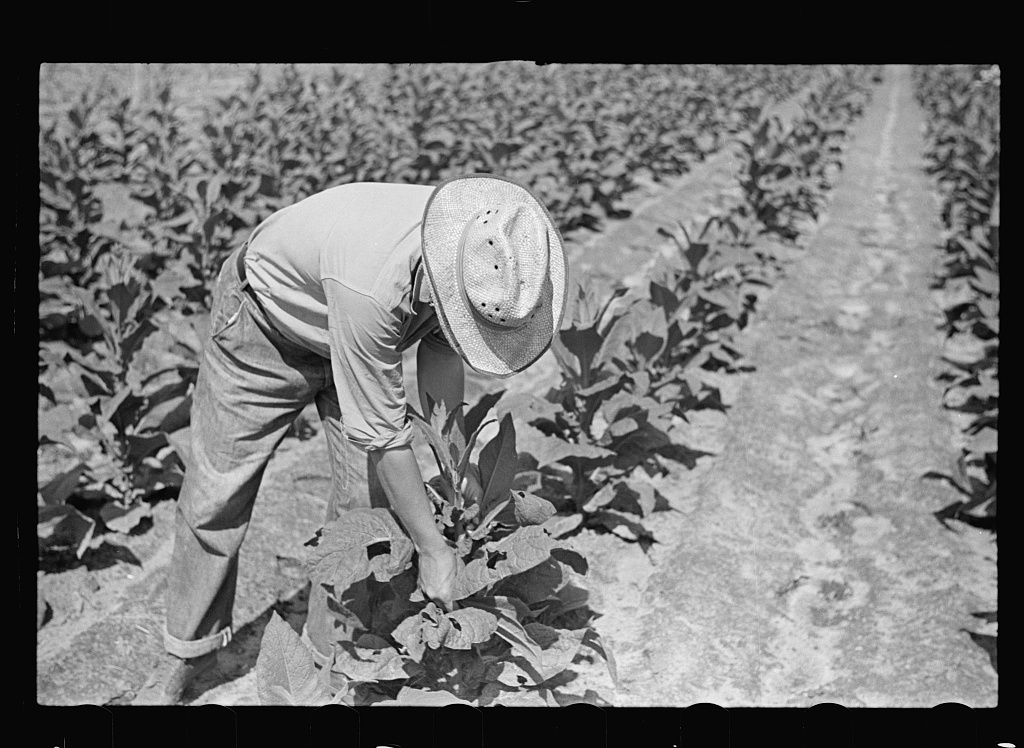
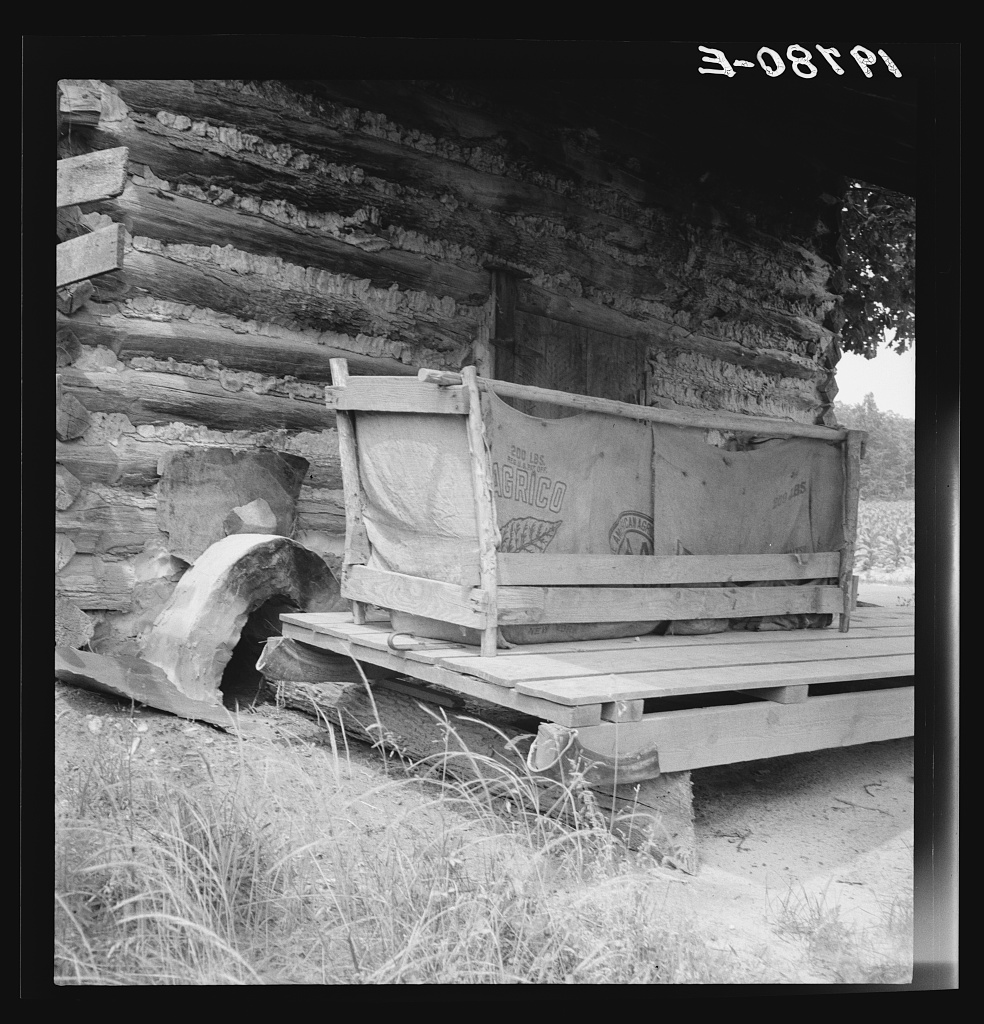
And these croppers, that is what they called them, would put the tobacco in the sled when they got an armful, and they didn’t waste a grown person driving that sled. I can remember driving the sled. Walking behind it with a pair of lines. I couldn’t see over it- I was too short. I would drive it down, and when it got full, I would carry it out to the end and back to the tobacco barn. Now the tobacco barn may be half a mile away, easy. Or a quarter mile away. It just depended. Sometimes, there was a field out, and you had to go through the woods to get to where the barn was. I remember doing that way, 2 years before I left home.
TCP: So, when you got to the barn, what did you do with the tobacco from there?
B: Pulled it up. Before they unload it and put it on shelves, unhook the traces, and went over here to one they just emptied. Hooked the traces up and took off back to the field.
TCP: How long did the tobacco stay in the barn? Did it cure for an amount of time?
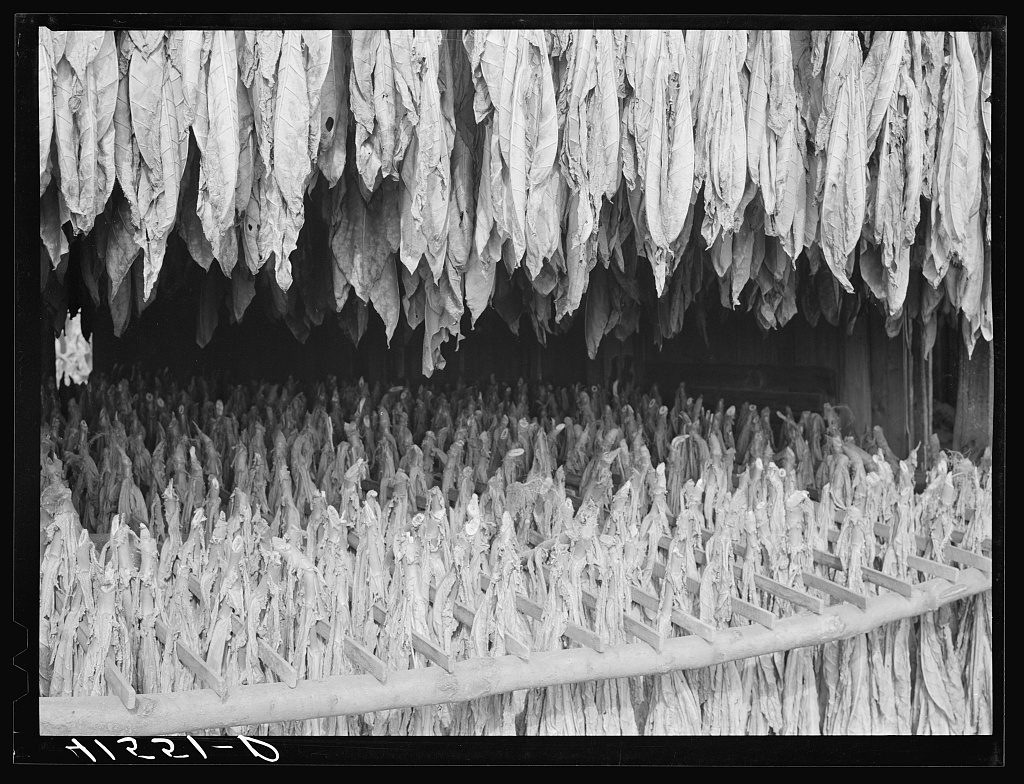
B: Yeah, they strung it on sticks. You know, three leaves to the thing. Tied it on sticks. When the stick got full, they stacked it over to the side. Then they go into these barns. Then I couldn’t help hang it in the barn, but I could help hand it in to them, because my legs were not long enough to stand on the tier poles. They’d go all the way to the top, people handing it up and hang in the barn fairly close together. When the barn got full, they closed it up, and [started] heating the barn. Most people then had a big wood furnace, and you fed it from the outside of the barn, and it went into the tobacco barn. The tobacco barn didn’t have cracks in it, you know, it was sealed up. But now they had big old floos about 24” in diameter, and it went all the way around that tobacco barn inside. About 28 inches away from the wall. That would get hot, and the heat would go up.
TCP: It was a matter of cooking it, I guess. Did they consider it smoking it?
B: No, no. There was no smoke.
TCP: The smoke was in the pipe. The heat of it.
B: You had to adjust the heat, look at the heat inside all of the time. Adjust how much time you were putting in that furnace.
TCP: Was this like a 24-hour situation?
B: 24-hour situation for 5-7 days.
TCP: So you are out there babying that fire. Making sure that you are drying out those leaves.
B: Now my granddaddy put in a coal stoker. You used coal, threw it in a hopper, and you can set that hopper to run how much you wanted. As you heated this, it wasn’t one heat. You had to, and I don’t remember the heat elevations and the times, but you might say every day, you raise the heat a little bit. The first two days were about the same, but then you went to raising the heat. You had to just keep raising it. To check how it was cooking, the old tobacco barns were built, a lot of them were logs, cement or clay in between ‘em, and they had shelters built all away around this tobacco barn. That’s where you pull that sled up and put it on shelves, and you stood under in the shade and strung it and done all of this. Now, to check that tobacco in the top of the barn, you go out here and there was a wood ladder built up to the shelter, across the shelter, and up the side of the barn. And on the eaves, there was little doors built in there. And you would open those doors and check the tobacco.
TCP: Put a thermometer and touch it?
B: Yep, touch it and see how hot it was up there.
To hear Bo tell part of this story in his own voice and hear his unmistakable South Georgia accent, take a moment to watch this video clip!
Filmed March 6, 2026
TCP: In terms of tobacco harvesting, did your fingers get stained? I have always heard that people’s hands were brown. Is that true?
B: Oh, that tobacco had, it wasn’t water, it was juice in it. It would just turn your hands. Now you can rub it off, but it was a job.
TCP: It was like a brown or green color?
B: It was brown to black. It was dirty.
TCP: What season did you harvest?
B: Harvest was about June/July.
TCP: So it was very fortunate then that it was hot already. Not for your harvesting, but for the tobacco heat cooking. You already had a hot 80-90 degree day, and you are making it even hotter with this wood or coal situation.
B: It was terrible hot out in that tobacco field for them people. Can you imagine bending over all day long and putting that stuff under your arm?
TCP: I imagine it had a smell too with the cooking process and everything.
B: The cooking process did have a smell. It really wasn’t a bad smell but it was a smell. It would get in your clothes.
TCP: I bet the whole process was messy for your clothes. Putting the tobacco leaves under your arm and the juice staining it.
B: When tobacco was ready to take out, cut the heat off and open the doors downstairs and upstairs. Let it sit there a couple of days. Most of the time, if you wanted to hurry it up, you would haul barrels of water and wet that floor. And that moisture would go up, and it would help the tobacco to not be so brittle. So you can handle it and not ruin it. Then you had to take it all out and carry it to another barn and stack it up. And you come back up and take it all off the strings. And put it in the sheet; big sheets down on the floor of the barn. You would pack a sheet of tobacco up. When you unstrung it, you didn’t put it on the sheet yet. You put it in a stack and stack it up. It had to come in order. It had to get away from that brittle stage, get a certain amount of moisture to it. Now the one place, that my granddaddy had, at first, not in later years, he had a well right there by the barn and had some little troughs right there by it. And he poured that water in there and let it set. And there was holes in the cracks and the water would come up and help, but it didn’t help a lot so he quit doing it.
TCP: Where did this happen in Turner County? What road, general area? Where were y’all farming?
B: We were in the Bethel Community.
TCP: So it was the Purcell Road area?
B: Yea. A lot of people had tobacco back then, not like now. And you swapped work. You didn’t have no money to hire nobody and there wasn’t nobody to hire. So, I remember the Myers family, the Willingham family, the Purcell family, the Fletcher family, and all… we gather tobacco together 5 days a week.
TCP: Where did you sell it?
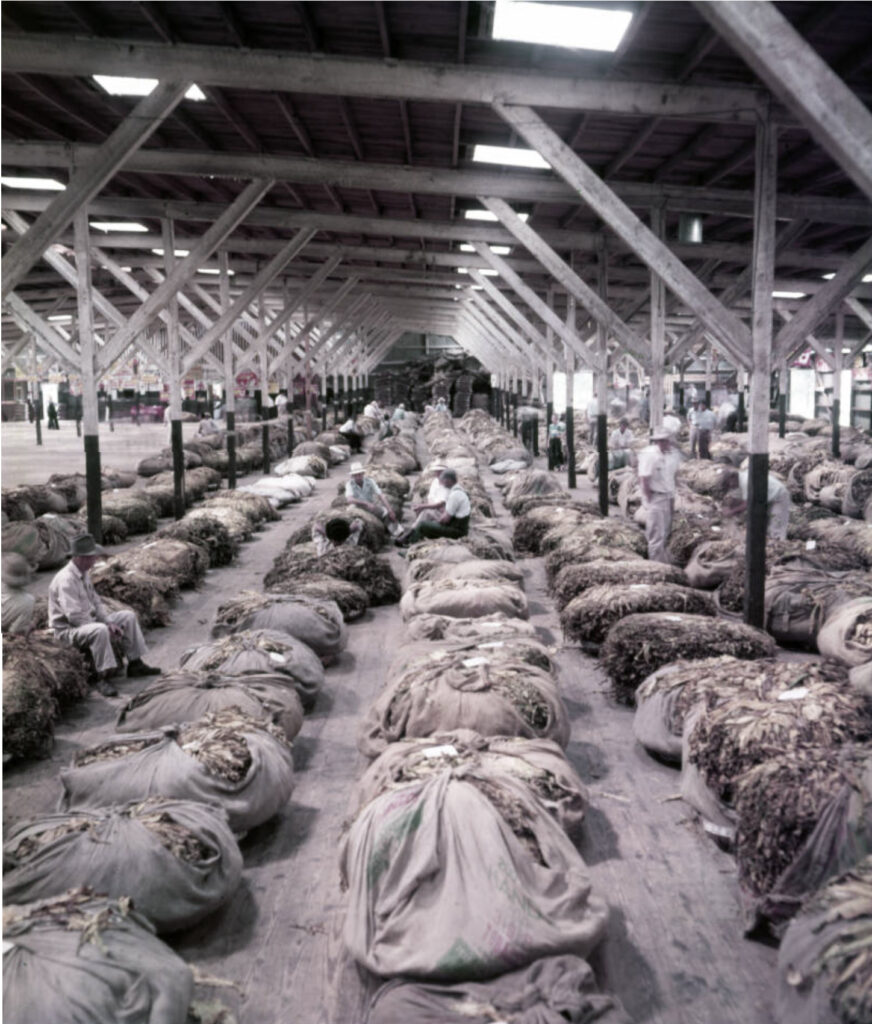
B: Well after you got it in sheets, Tifton had some good markets, about 5 or 6 of them. Fitzgerald had a big market.
TCP: And that was more common? I don’t hear of anybody doing tobacco down here at all. Do you know of anybody?
B: Well, there are a couple round. It’s so different. All the little farmers that had small acres – my granddaddy had probably about the largest acreage out here – allotment when they allotted tobacco. And everybody that we swapped with. If you had 4 acreage, you had a lot of tobacco.
TCP: And you think he had about 4 or 5 [acres]?
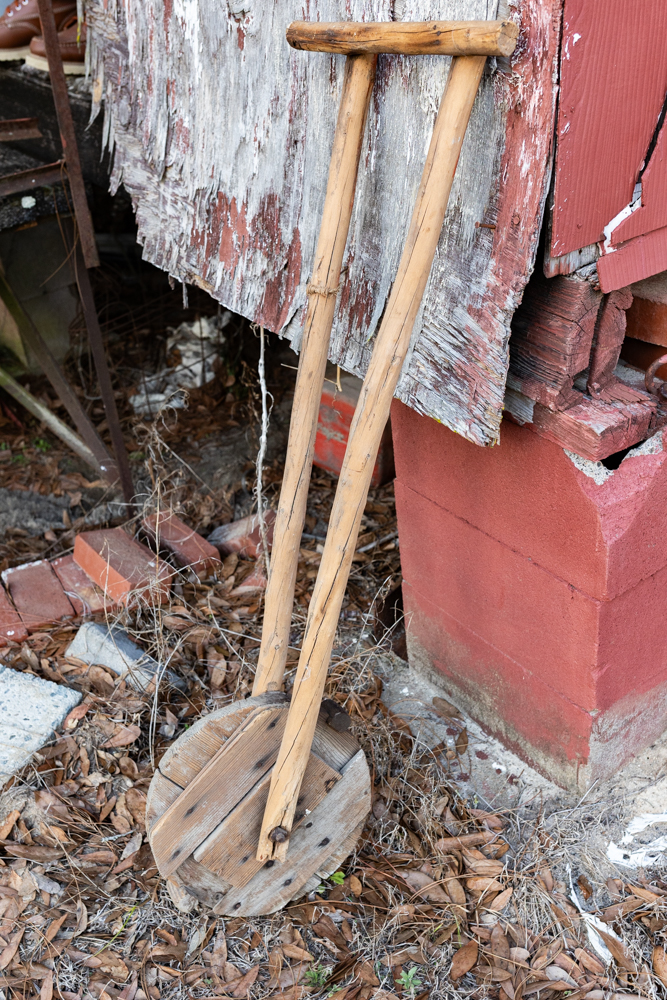
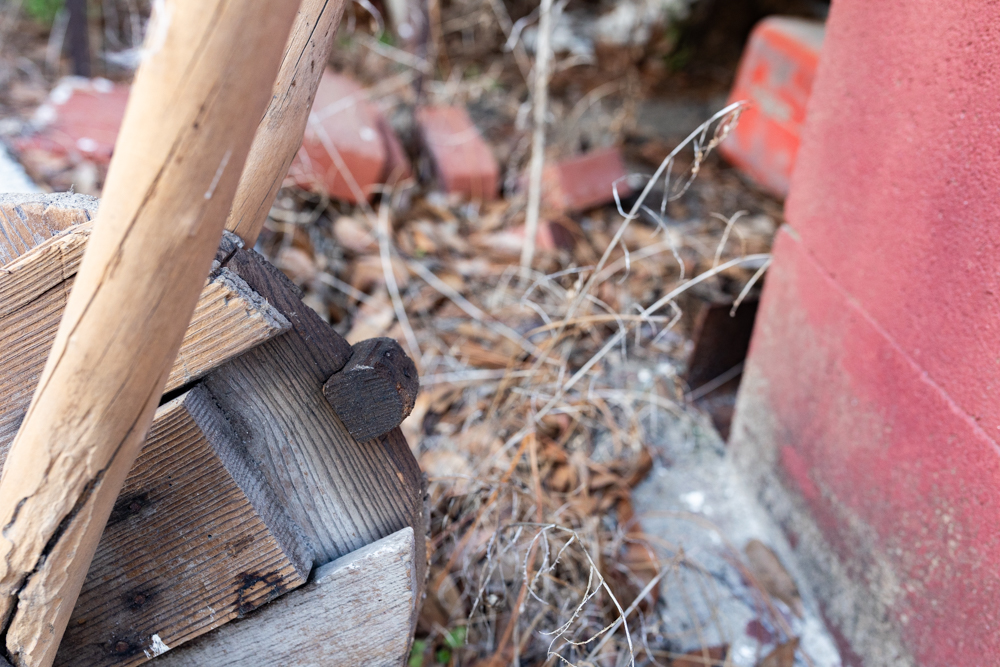
B: Yeah. He started out right about 5, and it dropped down and down. Now, when you set that tobacco out, you laid your rows off, and you went, and you either had your beds that you started them off and kept a cloth over them. You pulled your plants, carried them out here, and one of two ways, something like a walking stick you had made, and you would walk along and stick a hole in the ground. Well, the first way to know how far you are putting them – they made wooden wheels – I still got one. And it had a round wooden wheel, and ever so far, they had a little piece of lumber or stick, and it would mark the holes. It wouldn’t put the holes in, but it would mark them. And then you come along with this walking stick or a peg and stick down, and somebody would drop a tobacco plant in it. Somebody else would have a bucket pouring water into it. Now, can you imagine doing this over 2 to 4 or 5 acres?
TCP: Not at all.
B: And then they come out with this thing, it stood up about 36 inches, and it had a reservoir on it. It held 2.5 gallons of water. It had another little funnel-like over on the side. Somebody took that thing, and somebody else dropped a plant down in the funnel, stuck it down in the ground, pulled the trigger, and put the water in… You gotta have real soft dirt. It’s ingenious. Try lifting that thing with two and a half gallons of water in it.
TCP: Yea, it’s like two gallons of milk if you think about it.
B: Then, about 1949 or 1950, they came out with a one-row transplanter you put behind a tractor. Two people rode on it. Sat right down on the ground. Had a big old water tank up here. It would take two people and just creep along, and you would open up a hole – furrow – stick the plant down in there, and then it would already squirt a little water in it, and then it would close it back up. That migrated from one row planter up to four rows later in years.
TCP: How old do you think you were when you were working the tobacco field?
B: Oh I started when I was about 9 years old driving the sled. Before that, I would work taking off sticks from these stringers when they got a stick full. You would step up on that horse they called it and take that stick off and go putting it in the pile.
TCP: So you were 9 years old driving the sled and eventually started doing different jobs later?
B: After the sled, I went to cropping.
TCP: How long did you do that? Until you left Turner County?
B: Til I was 17 and left home.
TCP: And that is when you joined the military?
B: Yep.
About The People of Turner County Project:
This is an oral history project that works to both preserve, document, and celebrate the people of Turner County and the history through the stories of those who have experienced it.
This project collects oral histories of people who have lived or worked in Turner County, Georgia.

Leave a Reply