2,855 words, 15 minutes read time.
Content Warning: This article discusses racial violence, torture, and an attempted lynching in South Georgia during the 1960s. Some details may be disturbing or triggering for readers. There are also slurs and language that are offensive in nature within the interview, but very relevant to Winfred’s experience. The TCP does not support this type of language. Please proceed with care.
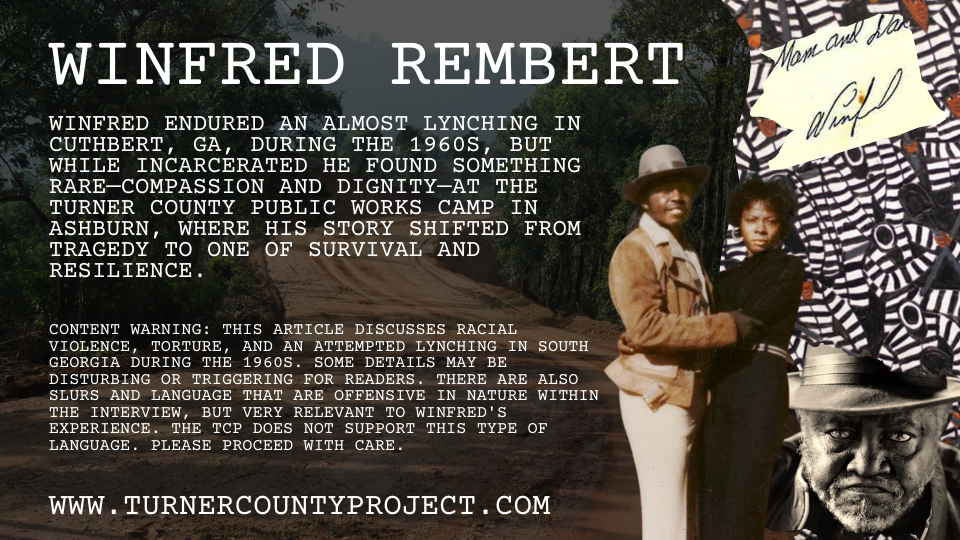
This oral history interview captures the life story of artist Winfred Rembert, told in a 2003 phone interview with Shelley Zorn as part of the Turner County Arts Council/Ashburn Historic Preservation Commission Oral History Project.
Winfred Rembert recalled his childhood in the cotton fields of rural Georgia, his involvement in Civil Rights Movement protests, and the brutal violence he suffered after being jailed in Cuthbert, where he was beaten, nearly lynched, and sentenced to decades in prison. Transferred through several camps, he eventually arrived at the Turner County Public Works Camp in Ashburn. There, conditions were more humane: he learned skills like road construction and literacy, was made a trustee, and, most importantly, met the woman who became his wife. Ashburn became the place where his survival turned toward resilience, shaping both his personal life and the art he later created from memory.
Listen to the full interview here. The full transcript is located in the archive if you would rather read it.
Early Life and Civil Rights Awakening
© The Estate of Winfred Rembert
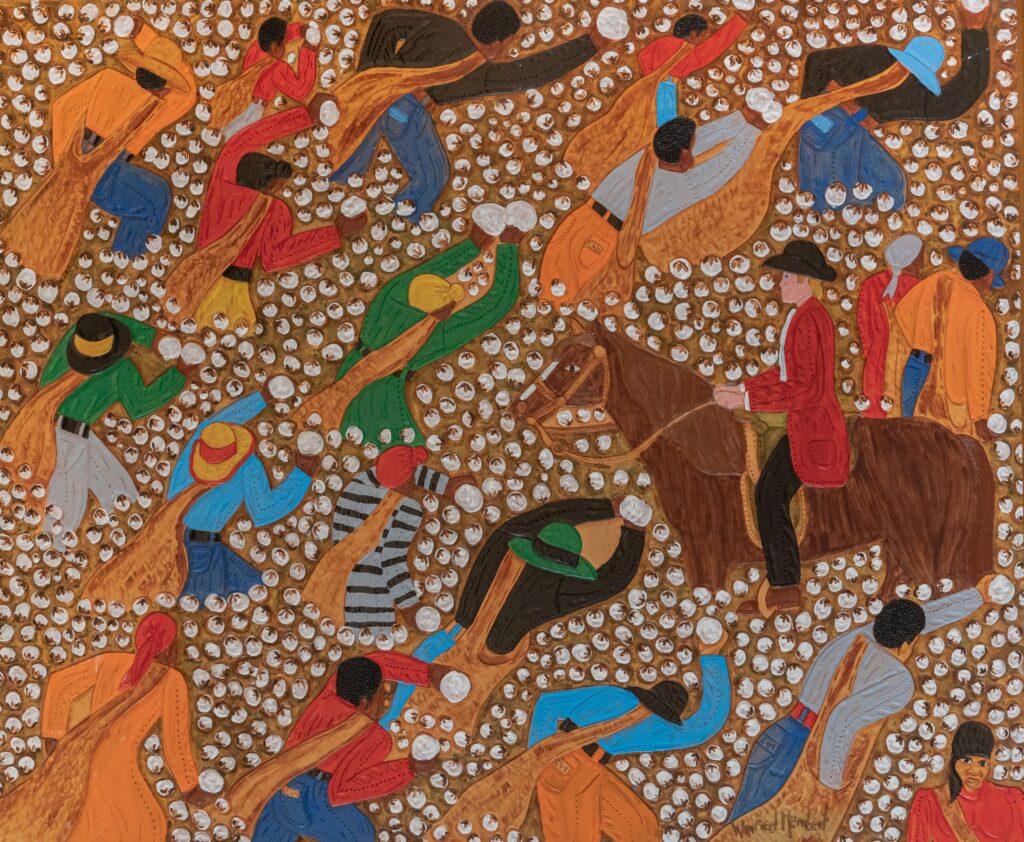
Winfred Rembert was born on November 22, 1945, in Americus, Georgia, and spent his childhood working in cotton fields. From an early age, he was deeply aware of poverty, hard work in the fields, and racial disparity. He missed more school than he could attend because he was expected to work in the fields. He did eventually become involved in the civil rights movement as a teenager. By age 14, he was riding buses to protests, participating in sit-ins, and listening to leaders in the movement, determined to challenge the oppressive structures around him. But that involvement led to his almost death.
The South Georgia Near-Lynching
At 19, Rembert faced one of the most harrowing experiences of his life. While participating in a Civil Rights event in Americus, GA, chaos broke out when Charlie Hopkins and another man murdered a 21-year-old man getting gas in a case of mistaken identity. Although the murder was not tied to the Civil Rights Movement, it created fear and chaos. Amid the confusion and fear, Winfred made a desperate decision: he stole a nearby car. As you can imagine, when shots are fired, people try to run and leave the area in any way they can. For Winfred, that was stealing a nearby car in an alley that had the keys inside it. In the stolen car, he ended up in Cuthbert, Georgia, where he was later arrested for the theft and placed in jail, where no one knew where he was, not even the Army. For two years.
Here is an excerpt where Winfred discusses the treatment he received:
Shelley: Okay. So you got caught with the car in Cuthbert. So you were in jail in Cuthbert?
Winfred: Yes, I stayed in jail a long time in Cuthbert.
Shelley: How old were you when that happened?
Winfred: I must have been about 18 because when I got sentenced, I was 20.
Shelley: Okay. What year were you born?
Winfred: 1945.
Shelley: 1945. Okay. Well, what happened to you after you went to jail there? What was the jail
like?
Winfred: Well, the jail was tough. You know, small cell. But the thing that was very unfair about
that is that I didn’t — no one knew where I was. And at that time, I was in the Army. And when the Army people came and looked for me, they told me that they had never seen me. I was locked up in the back.
Shelley: You are kidding.
Winfred: Yeah.
Shelley: Did they ever let your family know where you were at?
Winfred: No one knows where I was until after I got sentenced.
Shelley: Wow. So for two years.
Winfred: Yep.
Shelley: So the Army had you listed as AWOL.
Winfred: That’s exactly right. And so one day I got angry and I rolled the toilet paper into the
toilet and flooded the jail. And the deputy sheriff come back and he was, you know, he was
going through all the nigger stuff and talking — he was just talking a bunch of stuff and he was
going to come into jail and he was going to beat my butt. And when he come in and open the
door, you know, I was prepared to take that butt beating, you know. There was nothing else to do
but take it. But once he got in there and he was hitting me all in my face and kicking me down
and me back up and knocking me back down, I decided to fight him back. And I… when I hit
him, he went for his gun, you know. And when he went for his gun, him and I was wrestling over
the gun and I ended up taking it from him.
Shelley: Wow.
Winfred: And I didn’t know nothing to do but he was begging me to give him his gun back but I
surely wasn’t going to do that. And so I locked him in his cell and I escaped.
However, his escape was brief. Winfred sought refuge at the home of a local Civil Rights activist he knew. The wife allowed him inside, but later reported his presence to the police. Whether she acted out of fear for her family’s safety or because she believed he truly belonged in jail remains unclear. When the police arrived, they captured him again, and this time the consequences were far more severe. In retaliation for defending himself against the officer, Winfred was nearly lynched- hauled in the trunk of a car to a site already prepared for a hanging. He was left inside the trunk for hours. When he was finally let out at daybreak, what he first noticed was the ropes:
“There was three trees and three ropes. Three trees and it looked like to me it was a rope from each tree. But you know when they opened the trunk, it was daybreak. You know, day was breaking. And it seemed like I could see a rope in the distance as I looked up, as I was looking up out of the trunk at them and looking past them. You know, in the background, it looked like I could see a rope, but I wasn’t sure. But when they stood me up, I surely made out that that was a rope. You know, and as I looked down the line, it was another and another.”
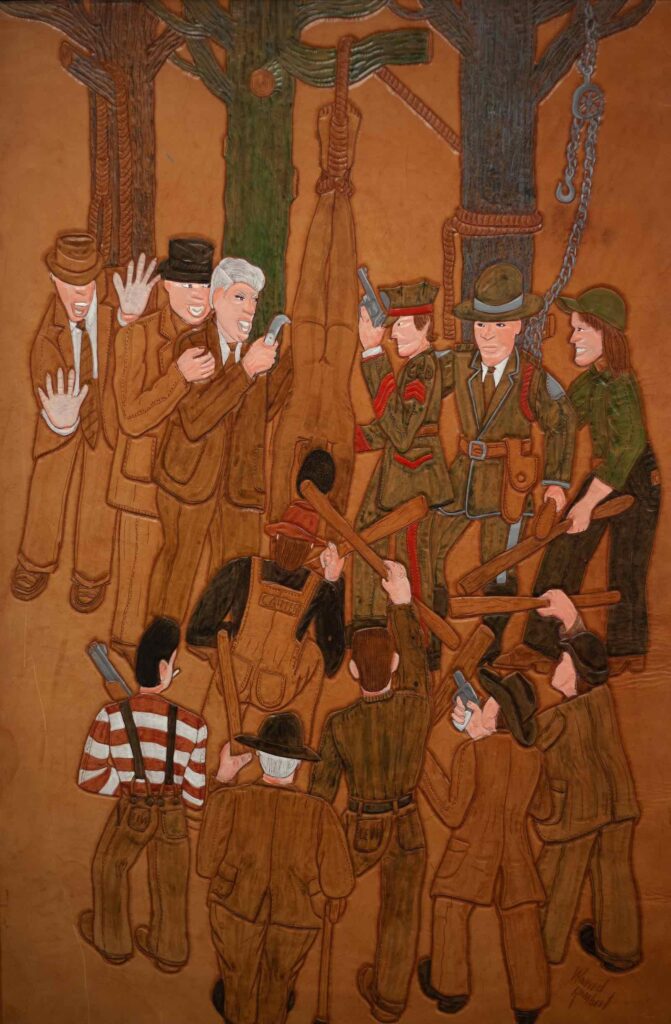
What followed was brutal. Winfred was stripped naked, hanged upside down, and stabbed in his genitals. He later recalled the searing pain, the blood running down his body, and the sharp memory of the shoes – the polished wingtips- worn by the man who intervened and stopped the attack before it became fatal.
“Don’t do that. I got a better plan for this nigger.” -Wingtips, the guy who ultimately saved his life.
After they cut him down, he was moved back to jail for a year. He received no medical care after his stabbings until months later. He improvised his own care, finding an old pair of pants in his cell, rolling them up, and pressing them tightly between his legs while clenching his body to slow the bleeding.
Later, he was paraded around Cuthbert Square in chains before being sentenced to 27 years in prison. This moment marked both a physical and emotional turning point in Rembert’s life.
Turner County Public Works Camp: A Place of Respite
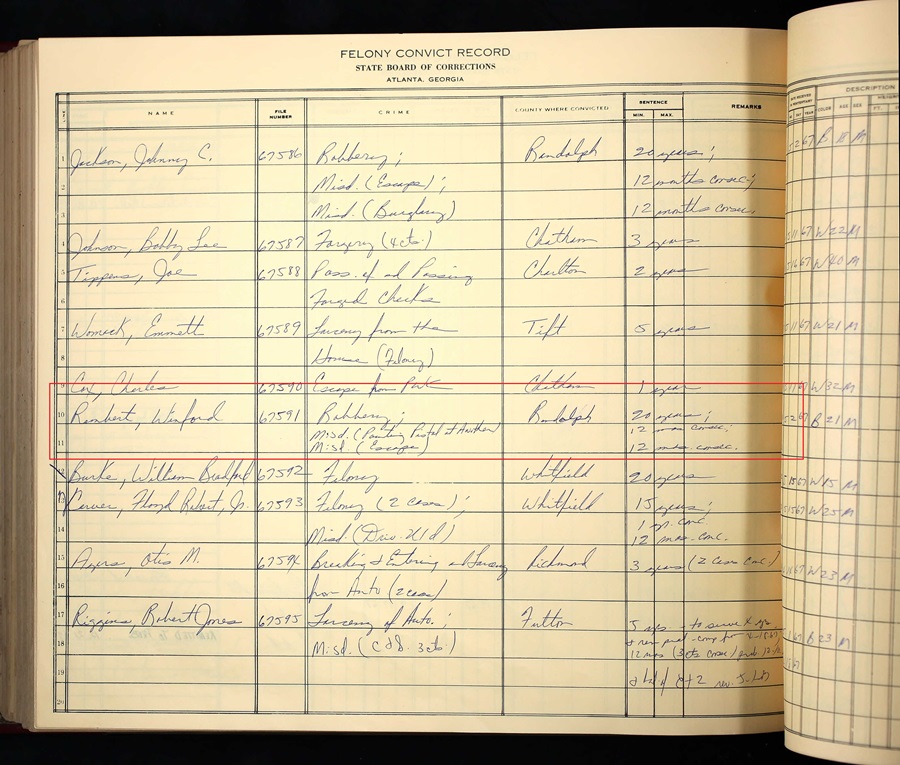
For the next seven years, Winfred served time in multiple places. His time at Reidsville Prison, which was known as being particularly harsh, was not one he remembers fondly. It was when Rembert was transferred to the Turner County Public Work Camp in Ashburn that he found something unexpected: a measure of freedom and human kindness within the walls of incarceration. The camp, unlike many others, allowed inmates to engage in recreational activities, interact with visitors, and work on road-building projects in the surrounding countryside. It also taught him basic skills such a reading and writing, which he was never able to fully learn as a child due to working in the cotton fields.
“We had arrived at a small state penitentiary work camp. It was the Turner County Public Work Camp in Ashburn, Georgia. There were twenty-five to thirty guys at the camp. They were all wearing black-and-white striped uniforms, except a few who had been there a long time. If you had been around there a long time, and you worked hard, they would give you pants with a single stripe straight down the side and you could wear any shirt you wanted… Some guys were sitting around talking with their girlfriends, who had come to visit. Others were playing basketball. There was no guard outside, and inside there were no cells, which was an improvement over where I just come from. Instead they had one big sleeping area for everybody. I thought maybe this was a good place after all. Youngblood took me to my space and I packed by clothes in a little chest upside the bed, he introduced me to the cook, whose name was Berry, and to another man, who was a guard. The guard was an old guy. They called him ‘Crip’ because he had a clubfoot.” (Chasing Me to My Grave, page 131)

“I stayed in Ashburn for about a year and a half,” Rembert recalled. “It was the best treatment I ever had. You know, it was. There was no guards, and when the guards were with you, it was like they weren’t with you, and you really got to do, as long as you do your work like the warden [Edgar Wayne Youngblood] asked you, you know, you really got to get a lot of freedom… they put me out on the road building detail. I built a lot of, you know, I learned how to build the roads and read the blueprints and all of that. It was just a great thing for me because that’s where I learned my reading and writing and all of that.” But all of that pales in comparison to Winfred’s memory of meeting his wife, Pasty Gammage.
While on a work detail repairing a bridge, he first noticed her passing by in a truck on the way to pick tobacco. He remembers thinking, “Oh, that’s a nice-looking girl.” He did not get a chance to speak with her, though. However, his opportunity came with a little help from Mother Nature herself. A big rain came through the area, and a bridge that was near the Gammage home was washed out. Luck was on his side because they sent Winfred out to fix it, and there Patsy was washing clothes with a rub board by the road.
Winfred approached her and said, “Excuse me.” Patsy looked up, probably with fear when she saw him in his black and white striped uniform, and ran into her house. According to Winfred, “…Her daddy [Edgar Gammage] came out with a shotgun and all. I couldn’t tell him I was liking his daughter. I asked him, I told him I wanted some water. So he gave me some water, and we talked for about five minutes, and I went on back to work. And then one day, her mother [Mary Gammage] came down to where we was working at and offered us some food. You know, told us we could come up to her house for dinner, so I got a chance to talk to her that day.”
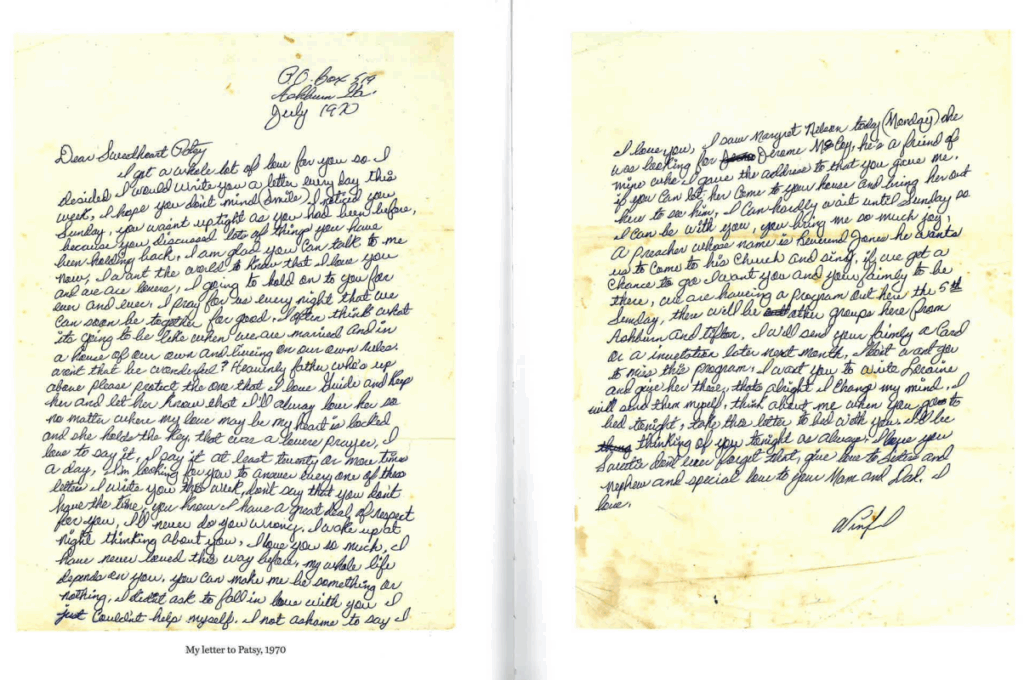
It took another few run-ins with Patsy and some convincing, but he began corresponding with her. Her family treated him with empathy despite his status as an incarcerated man. Their home became a sanctuary for Rembert, a rare space of trust, warmth, and human connection amid the harsh realities of the penal system.
Unfortunately for Winfred, the Turner County Public Works Camp closed in September 1971. With the closure meant that all inmates, Winfred included, were sent to other camps.
The Wiregrass Farmer claims costs were the reason for closure, but Winfred tells a different story in his memoir:
“Now what happened to Youngblood’s camp was this. One time, after I had been at camp for about two years, Sonny Cole and I went by this woman’s house. Sonny and her had a thing going. He parked the truck and went in to see her. But as soon as he got in the house, the husband drove up. The guy was going up the steps and Sonny came running out of the door and ran over the top of him. I’m sitting there in the truck watching every move. Then I started the truck up and began creeping off. I said, ‘Jump, Sonny! Jump!’ and he jumped on the back of the truck. By the time the guy had his gun and began to follow us. I drove way out in the country. I was driving fast on those country roads and this guy couldn’t catch us. The man turned around, went home, and killed his wife. And that’s what got the camp closed. The people in the neighborhood said that Youngblood gave us too much freedom.” (Chasing Me to My Grave, page 138).
Whatever the reason for its closure, you’ll have to reach your own conclusion. What is true is thatall of the inmates were removed from the camp and transferred out. Winfred was transferred to the Morgan County Public Works Camp, which he found far harsher than Turner County. “Morgan was a terrible place. It was terrible. And I stayed there a while, and then I got shipped to Bainbridge,” he recalled.
Life After Prison and His Artistic Legacy
Despite his hefty 27-year sentencing, Rembert was released in July 1974, returned to Ashburn, and married Patsy in December of that year. They initially moved to Rochester, New York, seeking safety and opportunity up North in the aftermath of his incarceration. The couple eventually settled in New Haven, Connecticut, raising a family while Rembert transformed his life through art with skills he learned in prison from a fellow inmate.
Rembert’s artistry grew from his experiences, including the trauma he endured and the moments of solace he found in places like Ashburn. He became the first living artist to have a solo exhibition at the Yale Art Gallery, and his work, often created on carved and tooled leather, tells stories of resilience, memory, and the complex reality of the Jim Crow South.
For Rembert, Turner County was more than a stop along the path of incarceration- it was a place of unexpected refuge. The friendships he formed, the work he accomplished, and the love he found in Ashburn stand in stark contrast to the violence he survived elsewhere in South Georgia. It is a reminder of the nuanced and often overlooked stories of grace that exist even in the darkest chapters of history.
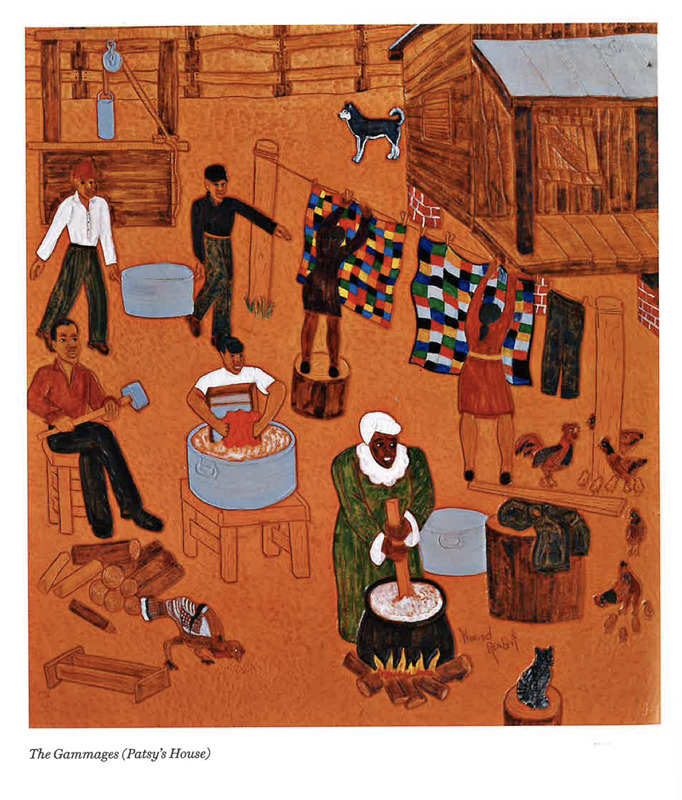
“Her family home became a safe haven for me away from prison life,” Rembert wrote in Chasing Me to My Grave.
Winfred Rembert passed away on March 31, 2021, leaving behind a legacy of resilience, storytelling, and artistry that continues to inspire. Turner County, and Ashburn in particular, became the rare place where kindness and human connection provided refuge when survival seemed impossible.
Further Reading, Viewing, and Study:
“Best Moment: Winfred Rembert Moonshiners Painting, Ca. 2001.” Youtu.be, Antiques Roadshow PBS, 13 Dec. 2024, youtu.be/eUq_oULHxso?si=C16sTvNV7M_TermT. Accessed 24 Sept. 2025.
Kelly, Erin I., and Bryan Stevenson. Chasing me to my grave. S.I.: Bloomsbury Publishing, pages 126-128, 2021.
Jordan, Joseph, and Akinyele Umoja. “CNN.com – Transcripts.” Cnn.com, 2025, transcripts.cnn.com/show/smn/date/2002-05-11/segment/09. Accessed 3 Sept. 2025.
Nast, Condé. “An Artist on How He Survived the Chain Gang.” The New Yorker, 29 Apr. 2021, www.newyorker.com/magazine/2021/05/10/an-artist-on-how-he-survived-the-chain-gang.
Surviving a Lynching | Ashes to Ashes | the New Yorker Documentary. 2021 (Youtube). The New Yorker. https://www.youtube.com/watch?v=-2Q97pXZE2g, Accessed 3 Aug. 2025.
Spivak, John. Hardtimes on a Southern Chain Gang. New York: International Publishers, 1932.
“Transcript of interview of Winfred Rembert,” Turner County Project Digital Archive Repository, accessed September 23, 2025, https://turnercountyproject.com/archive/items/show/1078.
Turner County Project Digital Archive Repository, Collection: Turner County Public Works Camp, https://turnercountyproject.com/archive/collections/show/27



Leave a Reply